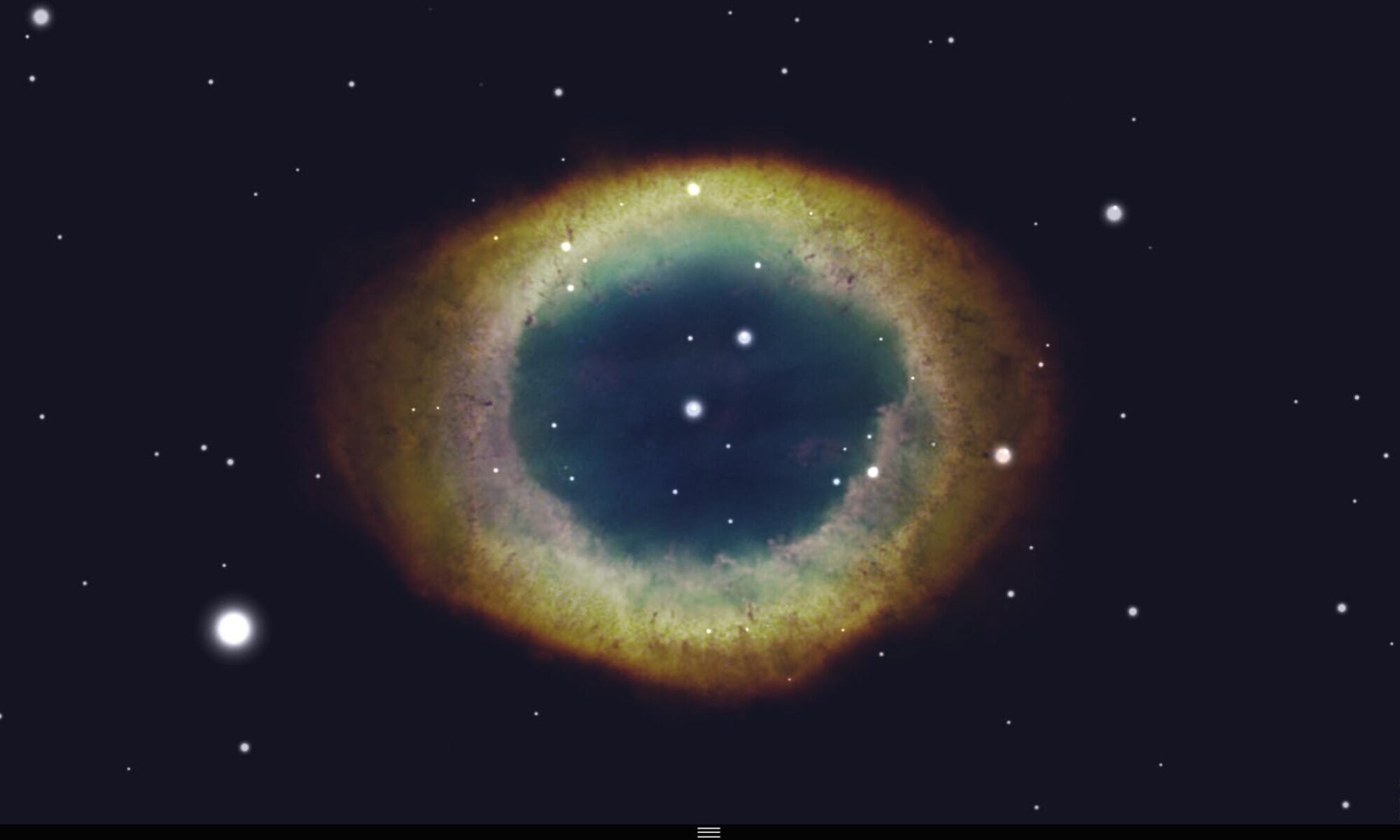


The blog had been silent for a long time, and so had the software. Version 3.0.304 went back to January 2025, 3.0.306 to May 2026, and in between I had little more to show. For some weeks now I have been working on WinStars 3 again, with four revisions between April and October 2026, including 3.0.309 released today. I do not present this as a great return: it is mostly months of quiet work, many fixes reported by those who use the software, and the hope that what has been repaired will stay repaired.
A detour into neurobiology
I had put WinStars aside for several years, to work in a field that has, at first glance, nothing to do with astronomy: bioinformatics applied to neurobiology. On one side, work on sequence alignment: finding, among billions of reads produced by a sequencer, the fragments that genuinely match a genome, and making that computation use graphics cards. On the other side, a project on epilepsy, focal cortical dysplasia, those lesions in which the cortex failed to organize properly during development, and the CNR1 gene, which codes the CB1 cannabinoid receptor found in large amounts in the brain.
But back to WinStars 3
A good part of the fixes of recent months are not new ideas but bottlenecks finally identified: texture decoding now takes place in the background, transfers to the graphics card are capped, label drawing has been made lighter, and timeouts and offline connectivity detection were revised.
The latest changes
3.0.305, 4 May 2026. The Qt, Assimp, Freetype and Quazip libraries were updated, and installation under Linux no longer requires awkward manual steps.
3.0.306, 19 May 2026. The behaviour of the dialog boxes was revised. There is little to see on screen, but menus, text entry and window closing misbehaved on some configurations, especially under Android and on AMD cards, and the remarks received on that point were more instructive than my own tests.
3.0.307, 26 September 2026. This is the most visible revision of the series, and it concerns shadows. Objects used to be lit without casting anything: satellites now cast their shadow onto their planet, the Moon’s shadow appears on the Earth during solar eclipses, Saturn’s rings shade the planet’s sphere, and probes and artificial satellites in turn receive cast shadows, which makes it possible to see the Earth hiding the Sun for a probe placed behind it. For moons, rings and eclipses the shadow is computed geometrically, frame by frame, from the positions of the Sun, the body and the observer; for three-dimensional models, probes, stations or landscapes, it is projected by the graphics card using shadow maps. Lighting was made consistent between planets, tiles of the Earth’s surface and imported models, in order to avoid those objects that seemed correctly lit in the middle of the night. The relief of terrestrial clouds was rebuilt, and loading files is faster.
3.0.308, 15 October 2026. WinStars 3 is now translated into Arabic, Persian, Chinese and Japanese, in addition to French, English, Spanish, German, Russian and Bulgarian. The rendering engine had to learn to display Chinese and Japanese glyphs and Arabic calligraphy, with revised handling of the graphics context and a few tests to check that the most difficult characters display. The rest is made of fixes: the information box, the presentation box under Android, windows that closed incorrectly, the Linux installation scripts, and that menu being selected by accident when the right button was released, which several people had reported.
3.0.309, 27 October 2026. Two changes concern the sky. The atmosphere had been rendered until now from a physical model of light scattering in the air; honest on paper, it produced in practice a horizon too yellow and a zenith too dark, and the sky gradient aged badly when zooming in. I replaced it with a table of measured colours, indexed on the altitude of the Sun below the horizon: the hues are read from that table and then blended pixel by pixel across the dome, which gives a twilight and a night closer to what one observes, and a lighting of the landscapes consistent with that of the sky. The usual stages, the end of civil, nautical and astronomical twilight, are preserved, but the palette remains deliberately restrained and does not claim to reproduce all the shades of a real sky. The second change is the simulation of atmospheric turbulence, what observers call the seeing: the image is distorted very slightly, stars twinkle, the outlines of planets tremble, and an object low on the horizon seems to ripple as above a heated road. In planetarium mode a pass applies to the sky a soft distortion built on two scales of motion, a slow broad sheet and a finer faster veil, with a deliberately very small amplitude, on the order of one pixel, and a slight dispersion of colours. The effect only appears when the atmosphere is displayed and the field of view is narrow enough, under two degrees, with an intensity that grows with magnification up to a maximum around half a degree; labels stay sharp because they are drawn after the distortion.
And now
The work is moving at a more regular pace again, with no guarantee that this pace will hold. What remains in progress is less ambitious than it looks: stabilizing shadows on every platform, improving the rendering of planetary surfaces and landscapes, and gradually taking up again the astronomy teaching module that has been waiting for several years. Version 3.0.309 is available for download and, like the previous ones, is free, without advertising and without data collection. It is not free of bugs, and several fixes still need to be checked on configurations I do not own: the reports from those who install it remain, as always, what moves the software forward most reliably.